
Trusted Pomegranate Exporter in India
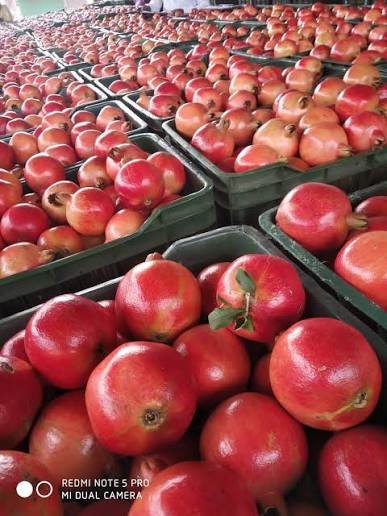
Pomegranate Exporter in India: Your Guide to Sourcing Premium Fresh Pomegranates
India is the world’s biggest producer of pomegranates, and an increasing portion of that crop is now sold in supermarkets, juice bars, and kitchens throughout Southeast Asia, Europe, and the Middle East. Knowing where the best fruit comes from, how it is graded, and what to anticipate from the export process will help you make a quicker, safer purchase if you are an importer, distributor, or retailer searching for a reliable pomegranate exporter in India.
Within this supply chain, Silverstone Export links foreign consumers with export-grade pomegranates that have been quality-checked and are sourced from Maharashtra’s top growing belts. From the regions and varieties that define Indian pomegranate quality to the certifications, packaging, and shipping details that determine whether a consignment arrives in top condition, this guide covers all the information a buyer needs to know.
Why Maharashtra Is India’s Top Producer of Pomegranates
Western Maharashtra, including districts like Solapur, Nashik, Sangli, Ahmednagar, Pune, and Satara, produces almost all of India’s export-quality pomegranates. Because of its semi-arid climate, which includes hot, dry summers, low humidity, and soil derived from basalt, this area is frequently referred to as the “pomegranate belt” of the nation. The Sangola taluka in Solapur was one of the first places in India to be developed especially for export-grade cultivation, and Solapur alone produces the vast majority of the state’s output.
Because it indicates that the supply chain surrounding Maharashtra pomegranate exports is exceptionally developed, this concentration is important to buyers. This belt’s concentration of packhouses, cold storage facilities, and irradiation centers designed especially for handling pomegranates reduces the time and temperature risk between the orchard and the export container.
The Types Customers Request
Not all pomegranate varieties travel well or satisfy the esthetic requirements of global retailers. India’s export trade is dominated by a few types:
Bhagwa — The benchmark export variety. It has a deep saffron-red rind, soft and juicy arils, and a shelf life of 30 to 40 days under proper cold-chain conditions, making it the preferred choice for long sea-freight routes to the Gulf, Europe, and North America.
Ganesh — An early commercial variety with a lighter red-yellow skin and pinkish, soft seeds, still widely grown across Maharashtra.
Arakta (Phule Arakta) — Valued for its attractive color and balanced sweetness, often used alongside Bhagwa for blended orders.
Mrudula — Known for larger fruit size, glossy dark-red skin, and strong demand in the UK and Gulf markets.
A fresh pomegranate exporter’s client should ask specifically for the Bhagwa variety to ensure consistency across shipments, since it is the most widely recognized grade internationally.
An overview of how export-quality pomegranates are selected and graded
It is not the port that determines export quality – it is the orchard that determines it. Growers and exporters typically screen fruit against several criteria before it is even harvested:
Size and uniformity — the pomegranate fruits are calibrated by their diameter so that every carton contains pomegranates of the same size.
Rind condition — In order to maintain the shelf life of the product, the skin should be free of sunburn marks, cracks, and blemishes, since surface damage reduces shelf life and affects buyer acceptance.
Brix and acidity levels — Sugar content and tartness are checked to match the taste profile a destination market expects.
Pesticide residue testing — Fruit is tested against Maximum Residue Limits (MRLs), particularly strict for the European Union, before it clears for export.
Only fruit that passes these checks moves into the export packing line, which keeps rejection rates low once the consignment reaches the destination port.
Certifications and Documentation Every Exporter Must Have
Because fresh produce crosses international borders, pomegranate export from India is governed by a fairly strict documentation trail. Any pomegranate exporter from India that you work with should be able to provide:
APEDA registration — The Agricultural and Processed Food Products Export Development Authority oversees and registers all fresh fruit exporters; this is a non-negotiable requirement.
Phytosanitary certificate — Issued by India’s Plant Quarantine Authority to confirm the shipment is free of pests and plant diseases.
Fumigation certificate — Required by most importing countries to prevent the spread of pests through packaging materials.
Certificate of Origin — Needed to claim preferential tariffs under applicable trade agreements.
Hortinet/AnarNet traceability records — A farm-to-shipment tracking system that lets buyers verify which orchard and cluster the fruit was sourced from.
Working with an exporter that keeps this paperwork organized reduces the chance of customs delays, which matters enormously for a perishable product with a limited shelf life.
Packaging and Cold-Chain Handling
Pomegranates bruise easily and are sensitive to temperature swings, so packaging is not just a logistics detail — it directly affects how the fruit looks and tastes when it reaches the buyer. Standard export practice includes:
Corrugated fiberboard (CFB) cartons, commonly in 4 kg or 5 kg sizes, sometimes with individual foam nets or paper cushioning to prevent contact bruising.
Ventilated carton design that allows airflow while still protecting the fruit during handling.
Storage and transport at 5°C to 7°C with controlled humidity, which can extend shelf life to several weeks even during long sea voyages.
Clear labeling on every carton, including variety, grade, weight, packing date, and recommended storage temperature.
Buyers who specify their preferred carton size and labeling requirements upfront generally see fewer packaging-related disputes once the shipment arrives.
Key Export Markets for Indian Pomegranates
India’s pomegranate exports have grown steadily, supported by rising global demand for antioxidant-rich fruit and by India’s price competitiveness compared with other major producers such as Iran and Turkey. Government trade data shows India’s pomegranate exports crossed roughly 72,000 metric tons in a recent fiscal year, with continued double-digit growth in value the following season, driven largely by demand in the Gulf.
The main destinations for Indian pomegranates include:
United Arab Emirates — One of the largest and most consistent buyers of Indian pomegranates year-round, valued for both retail and food-service demand.
Saudi Arabia, Bahrain, Oman, and Kuwait — Together these Gulf markets absorb a significant share of India’s seasonal export volume.
Bangladesh — A major volume destination due to proximity and steady demand.
Netherlands — Frequently the entry point for pomegranates moving into the wider European market.
United States — A newer but fast-growing destination following the first commercial sea shipments of Indian pomegranates that arrived on the U.S. East Coast in recent seasons.
Why Pomegranate Export to UAE Continues to Grow
Pomegranate export to UAE stands out because of consistent, year-round consumer demand, a large re-export and food-service market, and shorter transit times compared with European or U.S. routes. Shorter transit means the fruit spends less time in transit and arrives with more of its shelf life intact — an advantage that keeps UAE importers coming back to Indian suppliers season after season. Buyers sourcing for the UAE market typically request Bhagwa-variety fruit in mid-size cartons, since this combination balances retail shelf appeal with cost efficiency.
Seasonality: When Indian Pomegranates Are Available
Maharashtra’s growers use staggered flowering cycles (locally called “bahar” seasons) to extend availability across much of the year, but the Hasta Bahar harvest, typically from September through December, produces the highest-quality fruit and drives the bulk of export volume. Buyers planning annual procurement calendars often place their largest orders in this window, while smaller volumes remain available in other seasons depending on the grower cluster.
What to Look for in a Pomegranate Exporter from India
Not every supplier that lists pomegranates for sale is equipped to handle international shipments reliably. Before finalizing a supplier, it helps to confirm:
They hold current APEDA registration and can share phytosanitary and fumigation documentation without delay.
They source directly from established growing clusters like Solapur, Nashik, or Sangli, rather than mixing fruit of unknown origin.
They have access to pre-cooling and cold-storage infrastructure near the packing point, not just at the port.
They can confirm realistic transit timelines and shelf-life expectations for your specific destination.
They are transparent about grading standards, carton specifications, and Free-On-Board (FOB) or CIF pricing terms upfront.
Silverstone Export works with growers and packhouses in Maharashtra’s core pomegranate belt to source Bhagwa and other export-grade varieties, and coordinates the certification, packaging, and shipping steps required to move fruit from farm to port in line with buyer specifications.
Common Mistakes First-Time Importers Make
Buyers new to sourcing pomegranates from India sometimes run into avoidable problems:
Ordering without specifying variety — This can lead to mixed shipments that don’t match the shelf appeal buyers expected.
Overlooking cold-chain continuity — A break in refrigeration at any point, including at the destination warehouse, can shorten remaining shelf life significantly.
Underestimating documentation lead time — Phytosanitary and fumigation certificates take time to process; leaving this until the last moment can delay shipment.
Not confirming MRL compliance early — This is especially important for buyers in the EU, where residue limits are stricter than in many other markets.
Addressing these points during the initial conversation with your supplier usually prevents delays later in the process.
Final Thoughts
Sourcing from a reliable pomegranate exporter in India comes down to three things: knowing which growing regions and varieties actually meet export standards, confirming that your supplier holds the right certifications and cold-chain capability, and being clear about your packaging and shipping requirements from the start. Maharashtra’s established pomegranate belt, combined with India’s growing export infrastructure, has made the country a dependable long-term source for buyers across the Gulf, Europe, and beyond.
FAQs
1. What is the best pomegranate variety for export? Bhagwa is the most widely used export variety because of its deep red color, soft arils, and comparatively long shelf life, which suits both air and sea freight.
2. Which Indian state produces the most export-quality pomegranates? Maharashtra, particularly the Solapur, Nashik, and Sangli districts, produces the majority of India’s export-grade pomegranates.
3. What certifications should a pomegranate exporter from India have? At minimum, look for APEDA registration, a phytosanitary certificate, a fumigation certificate, and a certificate of origin. Global GAP certification is an added assurance for buyers with stricter compliance needs.
4. How long do fresh Indian pomegranates stay fresh during shipping? Under proper cold-chain conditions (around 5°C to 7°C with controlled humidity), Bhagwa pomegranates can maintain quality for roughly 30 to 40 days, which supports both air and sea freight to distant markets.
5. Why is pomegranate export to UAE so consistent? The UAE has steady year-round consumer and food-service demand, and its shorter transit time from Indian ports helps the fruit arrive with more shelf life remaining, which keeps buyers returning to Indian suppliers.
6. What packaging is used for exporting fresh pomegranates? Most exporters use ventilated corrugated fiberboard cartons, commonly in 4 kg or 5 kg sizes, with cushioning to prevent bruising and clear labeling of variety, grade, and packing date.
7. When is the best season to source pomegranates from India? The Hasta Bahar harvest, from September to December, generally produces the highest quality fruit and the largest export volumes, though smaller quantities are available through other seasons depending on the region.
8. What documents does an importer need to receive from an Indian pomegranate exporter? Typically a phytosanitary certificate, fumigation certificate, certificate of origin, commercial invoice, packing list, and bill of lading, along with any residue-testing reports the destination country requires.